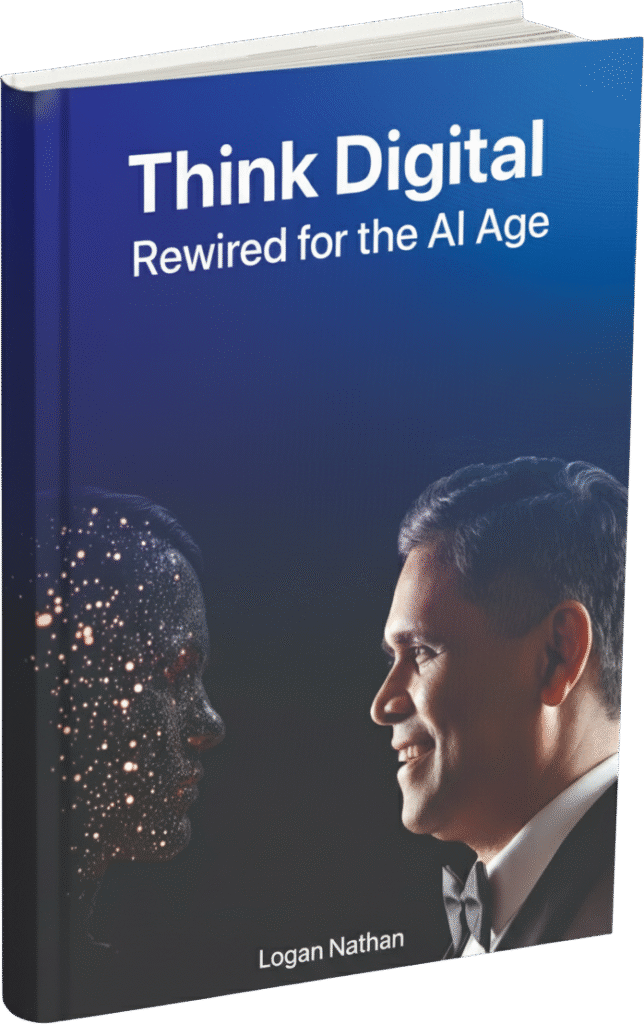
Think Digital Rewired for the AI Age
Go from AI curiosity to confidence, everyday action in 90 days – with simple frameworks, step-by-step guides and real stories you can actually relate to.

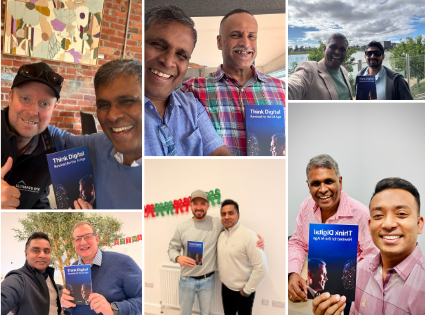

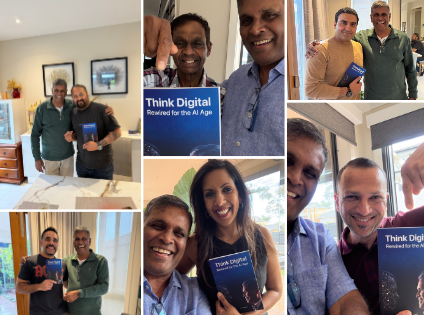

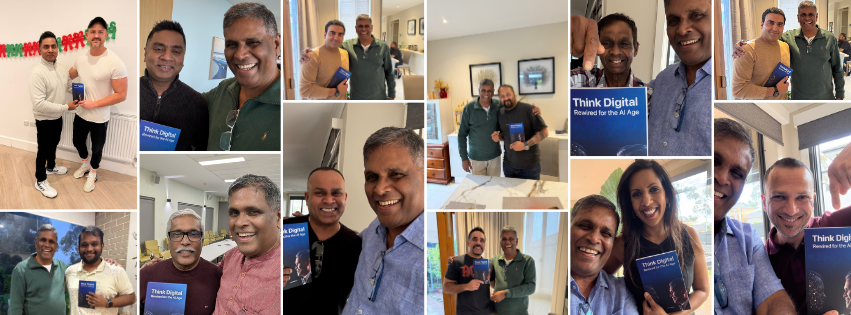
EXCELLENT
Based on 64 Reviews

Posted onVerified That's what I like What stood out to me was how much emphasis the book places on thinking differently, not just learning new tools. The examples are relatable and show how everyday people can adapt to AI rather than fear it.Posted onVerified A Smart Guide to Thriving in the AI Era This book offers a practical and inspiring look at how to succeed in today’s rapidly changing digital world. The explanations are straightforward, and the examples make complex AI topics easy to understand. A great read for anyone wanting to upgrade their mindset and stay ahead in the technology-driven future.Posted onVerified A Straightforward Guide to Understanding the New Digital World This book does a great job explaining how the digital landscape is changing with AI and what that means for everyday work and life. The author keeps things clear and practical, which makes the concepts easy to understand even if you’re not deeply into tech.I appreciated how the book focuses on real examples and simple steps you can take to adapt. It doesn’t feel overwhelming, and it gives you plenty to think about when it comes to staying relevant in a fast-changing world.If you want a helpful, down-to-earth look at how to navigate the AI era, this book is a strong pick. It’s informative, easy to read, and gives you useful ideas you can start applying right away.Posted onVerified Digital age This book breaks down the new digital world in a way anyone can understand. I love how the author focuses on mindset first, then strategy. The examples of how AI affects business, careers, and personal productivity were eye-opening.Posted onVerified A Must Read This book breaks down the complexities of AI and digital transformation into simple, actionable steps. It offers a roadmap that inspires confidence rather than overwhelm.Posted onVerified Discover the digital age and how it all started This is about the makings of a wondrous innovation and it's creation. Digital technology. The references goes back from a small item like mobile phones to today's AI. It is fascinating how far we have come.Posted onVerified A Clear, Inspiring Guide to Thriving in the AI Era This book offers a practical roadmap for navigating digital transformation in the age of AI, using real-world lessons built from decades of entrepreneurial experience. It’s an encouraging, easy-to-understand guide that helps anyone use new technology confidently and creatively.Posted onVerified A timely and insightful guide to thriving in an AI era! Think Digital. Rewired for the AI Age offers a fresh and practical perspective on how technology, especially AI is reshaping marketing, customer engagement, and business strategy. The book brilliantly captures how our digital habits have evolved and challenges readers to rethink their approach in an AI-first world.This isn’t just another tech trend book. It’s a roadmap for anyone seeking to understand what’s next and how to prepare for it. A must-read for marketers, business leaders, and anyone curious about how AI is redefining the way we connect, create, and compete.Posted onVerified Informative/interesting read on AI Very informative and interesting read for those looking to get a better understanding of the transitional challenge and opportunity being presented by AI for businesses and individuals. Highly recommend!
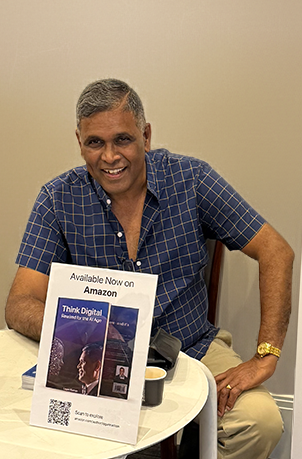
About Logan Nathan
Logan Nathan is a tech entrepreneur with over 40 years of experience helping businesses transform through digital innovation. As Founder & CEO of i4T Global, he has guided hundreds of organisations in using technology with confidence. This book distills the most practical lessons to help anyone master AI in a simple, human way.
Get your copy here









Frequently Asked Questions
Who should read Think Digital – Rewired for the AI Age?
If you’re ready to take your business to the next level, embracing the power of digital transformation and AI, you’ve come to the right place. Whether you’re an SME owner, a startup founder, or a leader in a large organisation, this book offers practical, actionable insights to help you navigate the rapidly evolving digital landscape.
In these FAQs, we address the key questions and highlight how this book can be your guide to not only surviving but thriving in the digital age.
From AI adoption to building a culture of continuous learning, discover how Think Digital – Rewired for the AI Age can help you future-proof your business and lead the way in this exciting new era.
Let’s dive in!
1. Who should read Think Digital – Rewired for the AI Age?
Think Digital – Rewired for the AI Age is a must-read for anyone who wants to not just survive but thrive in today’s digital-first world. Whether you’re a CEO, an entrepreneur, a startup founder, or part of a digital marketing team, this book provides invaluable insights on how to harness AI and digital transformation for growth.
If you’re looking to gain a competitive edge by integrating cutting-edge technology into your business operations, this book is your guide to doing so effectively. It’s not just about keeping up with the changes; it’s about leading them. If you want to future-proof your business, you can’t afford to miss this.
2. How can this book help me with AI adoption in my business?
This book is a game-changer for businesses eager to implement AI quickly and effectively. The 90-day AI adoption roadmap gives you a clear, actionable plan to start seeing results fast. You’ll learn how to identify high-impact AI use cases tailored to your business, select the best tools, and equip your team with the skills needed to implement them.
If you’ve been intimidated by AI or unsure of where to start, this is the step-by-step blueprint to take you from novice to expert in just three months. By following this roadmap, you’ll start unlocking the immense potential of AI to boost efficiency, automate tasks, and improve customer experiences, all without the steep learning curve.
3. What does AI-first thinking mean?
In today’s digital world, adopting an AI-first mindset is no longer optional; it’s essential. AI-first thinking is about embedding AI into your core processes from the start, not just as a tool, but as a strategic partner in your business. This book teaches you how to leverage AI to not only automate but also augment human capabilities, making your business more efficient, innovative, and ready to adapt to any market disruption.
If you’re serious about staying ahead of the curve, AI-first thinking is your key to unlocking the future of business. This isn’t about replacing people, it’s about empowering them to do more, smarter.
4. Why is continuous learning important for digital transformation?
Digital transformation isn’t a one-time event; it’s a journey that requires constant learning and adaptation. This book shows you how to create a culture of continuous learning within your organisation, empowering your team to embrace change, stay ahead of digital trends, and quickly adopt new technologies.
The businesses that thrive in today’s fast-paced digital landscape are those that don’t just keep up but evolve continuously. With actionable tips on building a culture of agility and growth, this book ensures you’ll be future-ready. If you’re ready to lead, rather than follow, in the digital age, this is your blueprint.
5. What role does leadership play in a digital transformation?
In the digital age, leadership is everything. This book shows you how to evolve from a traditional leader to a digital innovator, guiding your team through change with clarity, purpose, and empathy. It’s not enough to just adopt new technologies; you need to lead the way, setting a vision that inspires and empowers your team to innovate.
Modern leadership isn’t about command and control; it’s about fostering a culture of innovation and agility. This book gives you the tools to become the kind of leader who drives meaningful digital transformation, ensuring your business thrives in the AI era.
6. How does this book help with business strategy in the digital age?
Think Digital isn’t just a book about technology; it’s about aligning your digital strategy with your core business goals. It provides frameworks to help you define clear objectives, connect with your target market, and select the right digital tools to reach them effectively.
Whether you’re just starting out or looking to refine your existing strategy, this book will help you develop a strategic vision that integrates digital and AI into the heart of your operations. With clear, practical advice, it ensures your business strategy is not only relevant but resilient to future changes. If you’re looking for sustainable growth, this book will be your roadmap.
7. Can this book help SMEs integrate AI?
Absolutely. This book is a complete guide for SMEs to integrate AI into their business operations, quickly and efficiently. You don’t need a big budget or a team of tech experts to get started. With practical advice and easy-to-follow steps, it shows you how to implement AI in just 90 days.
From identifying the most valuable AI applications for your business to training your team and measuring success, this book breaks everything down into actionable, bite-sized pieces. AI isn’t just for the big players anymore. This book shows SMEs how to use AI to compete, grow, and innovate.
8. What are “Agentic Systems” and how do they fit into my business?
Agentic Systems are the next frontier of AI, autonomous workflows that can make decisions and take actions within defined boundaries, all without constant human intervention. This book explores how businesses can harness these systems to improve areas like customer support, operations, and CRM, making everything faster and more efficient.
If you’re ready to take your business beyond simple automation, Agentic Systems is your ticket to a more intelligent, self-sustaining operation. Learn how to implement and scale these systems in your organisation to drive greater efficiency, reduce costs, and enhance customer experiences.
9. How can I create hyper-personalised customer experiences using AI?
Hyper-personalisation is all about delivering one-to-one, dynamic experiences to every customer. With AI, you can use real-time data and behavioural signals to craft tailored content, product recommendations, and customised journeys for each individual.
This book shows you exactly how to implement these strategies, turning your customer interactions into meaningful, personalised experiences that build loyalty and drive conversions. If you’re looking to stand out in a crowded market, this book will teach you how to leverage AI to create hyper-relevant experiences that your customers will love.
10. Is this book just for tech companies or applicable to all industries?
Think Digital is designed for businesses in every industry, not just tech. Whether you’re in retail, healthcare, manufacturing, or finance, the strategies and insights provided apply to every business that wants to embrace the digital age.
In fact, the book features case studies and real-world examples from diverse sectors, proving that no matter your field, digital transformation is crucial for growth. Whether you’re launching a startup or leading a well-established company, this book gives you the tools to adapt, evolve, and thrive in the AI-powered future.
.
Top Lessons from the Book: Think Digital - Rewired for the AI Age
In today’s fast-paced world, it’s no longer enough for businesses to simply ‘go digital’. To truly thrive, you need to embrace digital transformation and, even more importantly, you need to think digital. As the digital world evolves, so too must we. With the rise of Artificial Intelligence (AI), it’s no longer just about keeping up; it’s about leading the way.
Here are the top lessons from Think Digital – Rewired for the AI Age packed with insights that can help you transform your business, enhance your operations, and lead in the digital age.
Lesson 1: Digital Transformation Isn’t Just About Technology
It’s easy to think of digital transformation as a bunch of new tools or fancy gadgets. But in reality, it’s all about your mindset. Digital transformation starts with your attitude towards change, your willingness to adapt, and how you align your business objectives with the digital world. It’s not just about jumping on the tech bandwagon; it’s about making digital thinking the core of everything you do.
Take a leaf from companies like AirBnB. They succeeded not because they had the best technology, but because they understood the need to think digitally from the very start. They aligned their business goals with their digital strategy, focusing on real-world problems their customers faced.
Lesson 2: Embrace AI-First Thinking
AI is no longer something you only hear about in sci-fi movies. It’s here, and it’s transforming the way we do business. But here’s the kicker, it’s not about replacing people. It’s about using AI to augment human capabilities.
AI-first thinking means putting intelligent automation at the core of your business processes. From chatbots helping customers to AI-driven analytics predicting trends before they happen, AI is designed to enhance what your team can do, not replace them. Embrace it and start integrating AI into your everyday operations to stay ahead.
Lesson 3: Hyper-Personalisation Is the Future
Gone are the days of generic marketing. Today, customers expect a personalised experience at every touchpoint. Hyper-personalisation means using real-time data and AI to tailor every interaction to the individual. It’s not just about calling them by name; it’s about understanding their needs, preferences, and even predicting what they’ll want next.
With hyper-personalisation, you can create one-to-one customer experiences that feel as if each person is being catered to individually. This can significantly boost loyalty, engagement, and, ultimately, sales.
Lesson 4: Empower Your Team with No-Code/Low-Code Tools
You don’t need to be a tech whiz to innovate. With no-code and low-code platforms, anyone on your team, regardless of their tech skills, can create digital tools, workflows, and dashboards. This not only boosts your team’s productivity but also encourages a culture of innovation.
These platforms make it easier for employees to experiment, automate processes, and adapt quickly to changing needs. Whether it’s building a new workflow or creating a custom dashboard, no-code tools make digital transformation accessible to everyone.
Lesson 5: Autonomous Workflows with Agentic AI
The future is all about making things run on autopilot. With agentic AI, businesses can create autonomous workflows that take care of tasks without human input. Whether it’s handling customer service requests, managing inventory, or running marketing campaigns, AI can step in and execute tasks efficiently.
The key here is not to see AI as just a tool for assistance, but as an agent that acts autonomously within set boundaries. This frees up your team to focus on the things that truly matter.
Lesson 6: Build a Culture of Continuous Learning
Digital transformation isn’t a one-time event. It’s an ongoing journey, and the businesses that succeed will be those that foster a culture of continuous learning. Encourage your team to keep learning, experimenting, and adapting to new digital tools and strategies. This mindset will help your business remain agile and prepared for whatever comes next.
A learning culture empowers employees to stay curious, try new things, and grow alongside the business. As the digital landscape continues to evolve, so should your team.
Lesson 7: A 90-Day AI Adoption Roadmap for SMEs
If you’re an SME, don’t worry, it’s possible to implement AI quickly and efficiently. A 90-day roadmap is all you need to start integrating AI into your business. The key is to start small, identify high-impact use cases, and build from there. Over time, you’ll see real results.
Start by selecting the right tools, training your team, and measuring the early wins. The goal is to show immediate value while building a foundation for long-term success.
Lesson 8: Assess Your Digital Maturity
Before diving headfirst into digital transformation, it’s important to understand where your business currently stands. A digital maturity self-assessment can help you evaluate your strengths and areas for improvement across strategy, people, processes, technology, and culture.
This framework helps you identify your business’s current capabilities, which will guide you as you develop a tailored digital strategy. It’s about knowing where you are before deciding where you want to go.
Lesson 9: Leadership in the Digital Age
The role of leadership has changed dramatically in the digital age. Today’s leaders must evolve from command-and-control managers to enablers of innovation. They need to foster a culture of trust, empowerment, and experimentation. Leaders must also be emotionally intelligent, set clear visions, and encourage a fail-fast mindset.
Effective leadership is what guides digital transformation; it’s the human element that ensures technology is used in ways that truly benefit the business.
Lesson 10: From Survival to Significance
At first, going digital was about survival. But now, it’s about creating lasting value. The next step in digital transformation is shifting your focus from short-term fixes to long-term, sustainable growth. How can your business create a lasting impact? How can you scale responsibly and drive innovation with purpose?
Digital-first businesses can thrive by creating value not just for their customers, but also for society. It’s about leaving a legacy that extends beyond profit.
The Digital Journey Continues
Digital transformation is not a destination; it’s a continuous journey.
The lessons from Think Digital – Rewired for the AI Age are meant to help you not just survive in the digital age, but lead with confidence. Whether you’re just starting out or deep into your digital transformation, remember that success lies in your ability to adapt, learn, and innovate.
So, what’s next for your business? Embrace the digital mindset, think AI-first, empower your team, and lead with purpose. The digital future is here, and it’s time to take the next step in your journey.
How SMEs Can Adopt AI in 90 Days: A Step-by-Step Guide
In today’s rapidly evolving business landscape, small and medium-sized enterprises (SMEs) must continuously innovate to stay competitive. One of the most powerful tools for achieving this is Artificial Intelligence (AI). AI is no longer just a buzzword reserved for large corporations—it’s accessible to businesses of all sizes, with the potential to dramatically transform operations, improve customer experiences, and drive growth.
But where do you start? How can SMEs embrace AI without getting overwhelmed by the complexity of the technology? The answer lies in a well-defined, actionable roadmap. In just 90 days, businesses can begin integrating AI into their operations and start reaping the benefits.
The Power of AI: Why SMEs Shouldn’t Wait
AI offers a wealth of opportunities for SMEs to enhance various aspects of their business. From automating routine tasks to providing deep insights through data analysis, AI helps businesses make smarter, faster decisions. Whether it’s streamlining customer service through AI-powered chatbots, improving marketing efforts with predictive analytics, or automating administrative functions, the possibilities are vast.
For SMEs, adopting AI early offers a significant competitive advantage. Businesses that embrace AI will be better equipped to meet the demands of today’s fast-paced market. Not only can AI reduce operational costs, but it can also increase productivity, improve accuracy, and enhance the overall customer experience.
The Road to AI Adoption: The 90-Day Transformation
Adopting AI doesn’t have to be a daunting task. In fact, with the right roadmap, SMEs can integrate AI into their business in just 90 days. The journey may seem long, but breaking it down into manageable steps ensures that businesses can achieve rapid, sustainable success.
While we can’t give you the full roadmap in this article, Think Digital – Rewired for the AI Age provides a comprehensive, step-by-step guide to adopting AI in just three months. Here’s a general overview of the journey ahead:
Preparing for AI Adoption
Before diving into AI tools and systems, businesses need to lay the foundation for a successful transition. This starts with adopting the right mindset. AI is not just about technology; it’s about transforming your business operations and culture. Leadership must commit to this transformation, ensuring the entire team is on board and ready for change.
Businesses should also assess their current infrastructure. Do they have the technology, data, and processes in place to support AI adoption? Establishing a clear understanding of these foundational elements is crucial for a smooth transition.
Identifying Key Areas for AI Integration
The key to successful AI adoption lies in knowing where it will make the most impact. For SMEs, this often means identifying repetitive or manual processes that can be automated, or areas where data can be used to make smarter decisions.
The book provides detailed advice on identifying high-impact areas for AI implementation, whether that’s in customer support, sales, or supply chain management. By focusing on a few key use cases, businesses can start small and scale up as they gain confidence with the technology.
Selecting the Right AI Tools
Once businesses identify their AI use cases, the next step is selecting the right tools. With countless AI-powered platforms available today, choosing the right solution can be overwhelming. But fear not; the book offers a curated list of the best tools for SMEs, covering everything from AI-powered CRMs to no-code platforms that allow non-tech employees to build AI solutions.
Selecting the right tools isn’t just about picking the most popular ones; it’s about understanding the specific needs of your business and ensuring the tools align with those needs.
Training Your Team and Building Capabilities
AI tools are only as good as the people who use them. For businesses to succeed with AI, they need to ensure that their teams are well-equipped to use the new technologies. Training staff and fostering a culture of continuous learning is essential for AI integration.
The book provides a detailed framework for training your team, ensuring they understand how to use the AI tools effectively. It also explores how to empower employees to contribute to AI initiatives, making the transformation a company-wide effort.
Measuring Success and Optimising for Impact
Once AI tools are in place, it’s important to track their performance and measure the impact on business operations. What results are businesses seeing? Are customers experiencing improved service? Is there an increase in productivity or sales?
The 90-day roadmap includes guidance on how to set up clear success metrics and use data to optimise AI implementations. This feedback loop is essential for continuous improvement, ensuring that businesses continue to refine and scale their AI efforts for maximum impact.
Beyond the 90 Days: Sustaining AI Growth
While 90 days is just the beginning, it sets the stage for long-term AI success. After the initial 90-day adoption period, businesses can begin to expand their AI applications, incorporating more advanced tools and exploring new use cases.
Think Digital – Rewired for the AI Age explores how to scale AI within an SME, ensuring that the business remains agile, innovative, and competitive as AI continues to evolve.
Why This Roadmap Matters
While we’ve outlined the general steps for AI adoption, the full 90-day AI adoption roadmap is available exclusively in the book. By following this detailed, step-by-step guide, businesses can seamlessly integrate AI into their operations, achieve measurable results, and position themselves for success in the digital age.
The roadmap provides everything SMEs need to know, from identifying the right AI tools and platforms to training teams and measuring success. It’s a practical, no-fluff guide designed to make AI adoption achievable and sustainable for businesses of all sizes.
Take the First Step
AI adoption doesn’t have to be a complex or overwhelming process. With the right plan in place, SMEs can integrate AI into their business and start seeing the benefits in just 90 days. Think Digital – Rewired for the AI Age offers the complete roadmap to guide you through every stage of the process, from planning and implementation to scaling and optimisation.
Don’t wait to embrace the future. Get your copy of Think Digital – Rewired for the AI Age today and take the first step toward transforming your business with AI.
AI-first vs AI-enabled: What’s the Difference?
If you’ve ever thought, “We’re using AI… so are we AI-first now?”, you’re not alone. Most businesses start by adding AI to what they already do (AI-enabled). A smaller number redesign how work gets done with AI as a core capability (AI-first). The two sound similar, but they lead to very different outcomes.
What do “AI-enabled” and “AI-first” mean in plain English?
AI-enabled means AI is an add-on. You use AI to speed up tasks inside your existing way of working: drafting content, summarising meetings, answering FAQs, improving search, auto-tagging, basic forecasting.
AI-first means AI is part of the design. You build (or rebuild) processes with intelligent automation at the centre, not to replace people, but to augment capability and remove friction across end-to-end workflows.
A simple way to remember it:
- AI-enabled: “How can AI help us do this faster?”
- AI-first: “If we designed this from scratch today, where should AI do the heavy lifting — and where must humans stay in control?”
And once you’ve got that distinction, the next question becomes obvious: which one is right for you right now?
Why does the difference matter for SMEs?
Because your risk, cost, change effort, and ROI timeline all shift depending on the approach.
- AI-enabled is usually quicker to roll out and easier to trial safely.
- AI-first can create bigger performance leaps, but it demands clearer processes, better data discipline, stronger governance, and real buy-in across the organisation.
That last part matters: transformation only sticks when it’s understood, accepted, and owned across the business, not parked in one team.
What does “AI-enabled” look like in the real world?
AI-enabled is where most teams should start, because it’s practical and measurable. Typical examples:
- A marketing team uses AI to draft first-pass campaigns, then humans refine tone and compliance.
- Customer support uses AI to suggest replies, while agents approve and personalise.
- Finance uses AI to categorise invoices or flag anomalies for review.
- Sales uses AI to summarise calls and propose follow-up emails.
It’s still your same workflow, just with less manual effort and faster turnaround. This is often the bridge that builds confidence (and AI literacy) before bigger changes.
What does “AI-first” look like in the real world?
AI-first shows up when you stop “sprinkling AI” and start redesigning the work. For example:
- Service: AI triages inbound queries, drafts responses, routes edge-cases to specialists, and learns from resolutions.
- Operations: AI predicts delays, auto-creates tasks, updates systems, and escalates exceptions.
- Marketing: AI dynamically personalises content based on behaviour, not just broad segments.
- Cross-functional workflows: AI agents act autonomously within defined boundaries across tools like CRM, support, and ops.
Notice the difference: AI-first is less about “a tool” and more about a system of work.
Are we “AI-first” if we use ChatGPT every day?
Not necessarily.
Daily usage often means you’re AI-enabled (which is great). AI-first is less about frequency and more about structural change:
- Have you redesigned a process so AI is embedded in the flow?
- Do you measure outcomes (time saved, quality uplift, conversion lift, cost-to-serve drop)?
- Do you have guardrails (privacy, approvals, data handling, escalation paths)?
- Does more than one team benefit consistently?
If the answer is “not yet,” that’s not a failure. It’s just a sign you’re ready for the next step.
Can a business be both AI-enabled and AI-first?
Absolutely, and in practice, it should be.
A sensible path looks like this:
- AI-enabled first (prove value quickly, build skills, reduce fear).
- AI-first selectively (pick 1–3 workflows where speed, cost, or customer experience really matters).
- Scale with governance (repeat what works, retire what doesn’t).
This mirrors how digital transformation succeeds more broadly: it’s not “tech for tech’s sake”, it’s aligning people, process, and technology to business goals.
How do I know which approach we’re ready for?
Here’s a quick readiness check.
You’re ready to go AI-enabled if you can:
- identify repetitive tasks,
- set simple rules (what can/can’t be shared),
- and nominate owners for quality and approvals.
You’re ready to go AI-first if you can also:
- map the workflow end-to-end (including exceptions),
- define what “good” looks like (KPIs),
- and commit to organisation-wide adoption (not a single-team experiment).
If you’re not ready for the second list yet, start with the first, and treat it as skill-building, not “just tooling”.
What are the most common mistakes people make with these labels?
- Calling a tool rollout “AI-first”.
If the workflow didn’t change, it’s not AI-first; it’s AI-enabled. - Automating the mess.
If a process is unclear, AI will make it faster… at producing inconsistent outcomes. - No ownership.
AI needs a process owner and a quality loop, or it becomes “everyone’s tool and nobody’s responsibility. - No guardrails.
The fastest way to lose trust is using AI without clear rules on data, approvals, and escalation.
The good news? These are leadership and process problems, which means they’re fixable.
What does this mean for my team’s roles and skills?
The goal isn’t replacing people; it’s amplifying what they can do. In fact, AI-first thinking explicitly frames AI as augmentation, putting intelligent automation at the core while humans steer outcomes.
In practical terms, teams shift from:
- doing the first draft → reviewing, refining, approving
- chasing information → interpreting signals and making decisions
- manual updates → exception handling and customer empathy
That’s why AI adoption is as much a capability uplift as it is a tech uplift.
Where does the book fit into all of this?
If this topic has made you realise, “We’ve got tools… but we don’t yet have a clear approach,” that’s exactly why Think Digital – Rewired for the AI Age exists. It covers AI-first thinking and the operating model shifts behind it, plus practical frameworks like a Digital Maturity Self-Assessment and a 90-day AI adoption roadmap for SMEs.
It’s designed to help you move from “AI experiments” to confident, measurable implementation, without losing the human judgement that makes your business your business.
What is agentic AI?
If generative AI is the teammate who writes the draft, agentic AI is the teammate who can also take action, within boundaries you set.
Instead of only responding to prompts, an agentic system can be given a goal (like “clean up these customer requests and escalate the urgent ones”) and then plan steps, use tools, check progress, and loop until it’s done, with varying levels of human oversight.
So… what does “agentic” actually mean?
“Agentic” comes from agency – the ability to act.
In the AI world, agentic AI refers to systems that don’t just generate an answer, but can make decisions and take goal-directed actions, often by calling other software tools (APIs, CRMs, calendars, ticketing systems, internal databases).
How is agentic AI different from a chatbot like ChatGPT?
A chatbot mainly talks. An agentic system can do.
- Chatbot: “Here’s a suggested email reply.”
- Agentic AI: “I drafted the reply, checked the customer’s history, logged the interaction in the CRM, and queued it for your approval before sending.”
That “queued it for approval” part is important: good agentic setups are designed so humans stay in control of the high-stakes moments.
Is agentic AI the same as “AI agents”?
People use the terms interchangeably, but there’s a helpful nuance:
- AI agents can be thought of as the building blocks (individual helpers).
- Agentic AI is the coordinated way those helpers are used to complete a broader job.
How do agents “work” behind the scenes?
Most agentic systems follow a simple loop:
- Understand the goal (what “done” looks like)
- Break it into steps (plan)
- Use tools (retrieve info, update systems, trigger actions)
- Check results (did it work? what changed?)
- Repeat until complete, or escalate to a human
One widely used definition is basically: a model autonomously using tools in a loop.
What are realistic business use cases right now?
For SMEs, the best early wins are “busywork-heavy, rules-light, and easy to review. For example:
- Customer support: triage tickets, suggest responses, draft knowledge-base updates
- Sales ops: update CRM notes, generate follow-ups, prep meeting briefs
- Finance/admin: reconcile transactions, chase missing invoices, flag anomalies
- Operations: create tasks, update stakeholders, monitor exceptions
If your team already uses AI to write, agents are the natural next step: AI that can write + act.
Does agentic AI mean “fully autonomous” AI?
Not necessarily, and honestly, it shouldn’t in most businesses.
A better way to think about it is levels of autonomy, for example:
- Suggest: drafts actions for a human to approve
- Assist: completes low-risk actions automatically, escalates edge cases
- Operate: runs end-to-end with monitoring and checkpoints
Even researchers and vendors distinguish between structured workflows (more predictable) and true agents (more dynamic and autonomous).
What are the biggest risks to watch?
Agentic systems can be brilliant, and also dangerously confident if you set them loose without guardrails.
Common risks include:
- Wrong actions at speed (small mistakes multiplied)
- Data handling slip-ups (privacy, permissions, sensitive info)
- Security issues where malicious content manipulates an agent into doing the wrong thing (a known concern as agents get more “hands on” with systems).
None of this is a reason to avoid agentic AI, it’s a reason to implement it like a grown-up: thoughtfully, with controls.
What guardrails should we put in place?
A practical starter set:
- Clear boundaries: what the agent can/can’t do
- Permissioning: least-privilege access (only what’s required)
- Human approvals: for sending messages, spending money, changing records, or anything customer-facing
- Logging: keep tamper-evident activity logs so you can audit decisions later.
- Monitoring and fallback: alerts, rate limits, and a safe “stop” button
If you do nothing else: keep humans in the loop for customer impact and financial impact.
How do we start without overcomplicating it?
Try this simple progression:
- Pick one workflow that’s frequent and annoying (but not high-risk)
- Define “done” (time saved, faster response, fewer errors)
- Start in “draft + approve” mode
- Measure, tune, document
- Only then increase autonomy for the safest steps
This approach builds confidence and capability, without betting the farm on day one.
What does this mean for Think Digital – Rewired for the AI Age?
If “agentic AI” feels exciting and a bit daunting, you’re exactly who the book is written for.
Think Digital – Rewired for the AI Age helps you build the foundations that make agentic AI genuinely useful: clearer workflows, stronger digital habits, and practical ways to lift AI literacy across your team, so you can adopt what works, safely, without the hype.