
Share this article

Table of Contents

Your Business Needs AI. But Where Do You Start? - A Strategic Guide for SMEs

Your Business Needs AI. But Where Do You Start? – A Strategic Guide for SMEs

Table of Contents

Key Takeaways

  • AI is essential for modern business strategy, not just a tool.

  • Assess your business’s AI readiness before implementation.

  • Adopt a strategic approach to integrate AI into business operations.

Key Answer

AI integration starts with strategy, not tools. Assess your business needs, identify areas for improvement, and choose AI solutions that align with your goals.

In today’s rapidly evolving marketplace, the question isn’t if your business needs AI, but where do you start? As a business owner, leader, or professional, understanding AI’s transformative role is not optional–it’s imperative. AI is not just a tool; it’s a paradigm shift that affects how we work, lead, serve customers, compete, and stay relevant.

For small and medium enterprises (SMEs) especially, integrating AI can seem overwhelming. But it doesn’t need to be. In my experience, the key is to learn to think differently about AI. This doesn’t mean you need to become an AI expert overnight. Instead, embrace a strategic approach that aligns AI with your business goals.

Why Your Business Needs AI Now

Businesses today face unprecedented pressure to stay competitive and efficient. AI has emerged as a critical asset in achieving these goals. It offers the potential to automate routine tasks, enhance decision-making, and provide insights that were previously unreachable. For SMEs, AI is no longer a luxury; it’s a necessity.

In many industries, AI has already begun to reshape the landscape. According to a study by McKinsey, companies that have adopted AI have seen a significant increase in productivity and decision-making efficiency. As such, SMEs must consider AI not just as a tool but as an integral part of their business strategy.

Assessing Your AI Readiness

Before diving into AI solutions, it’s crucial to assess your business’s readiness. Begin by examining your current workflows: where are the bottlenecks? What tasks consume too much time or are prone to error? Identify areas where AI can bring tangible improvements.

A simple AI readiness audit can guide this process. Questions to ask include: Is your data well-structured and accessible? Are your teams aware of AI’s potential benefits? Understanding these factors will help in devising an effective AI strategy.

Readiness Aspect

Key Questions

Data Management

Is your data well-structured and accessible?

Team Awareness

Are teams aware of AI’s potential benefits?

Workflow Analysis

Where are the bottlenecks and repetitive tasks?

My Perspective

As an author and AI advocate

AI has the potential to revolutionise how SMEs operate, offering opportunities for unprecedented growth and innovation. It is crucial for business leaders to adopt a strategic mindset, prioritising problem-solving over technology adoption. This strategic approach will not only streamline operations but also unlock new avenues for growth, enabling businesses to stay ahead in a competitive market.

The Strategic Approach to AI Adoption

Starting with an AI strategy rather than tools ensures a more integrated and effective adoption. The focus should be on business problems, not technology itself. This involves identifying specific areas for improvement be it customer service, logistics, or marketing–and choosing AI tools that address these needs.

For instance, if customer service is a key area, AI chatbots can be implemented to handle routine inquiries, freeing up staff for more complex issues. It’s essential to connect the chosen AI tools to the right workflows to realise their full potential. A strategic approach not only maximises benefits but also minimises disruptions.

Case Study: Real-World Application of AI

“Businesses are evolving. AI is not just a tool for efficiency, but a partner in growth.” – Logan Nathan

Consider a local SME that successfully implemented AI to streamline its operations. Initially bogged down by manual data entry and inefficient customer service processes, this business transformed by adopting AI-driven solutions.

Key changes included:

  • Automated Data Entry: Reduced human error and improved data accuracy.

  • AI Chatbots: Enhanced customer response times and satisfaction.

  • Predictive Analytics: Provided insights into customer behaviour, leading to better-targeted marketing strategies.

The results were clear: increased operational efficiency, higher customer satisfaction, and improved revenue streams. This case underscores the importance of aligning AI initiatives with specific business objectives.

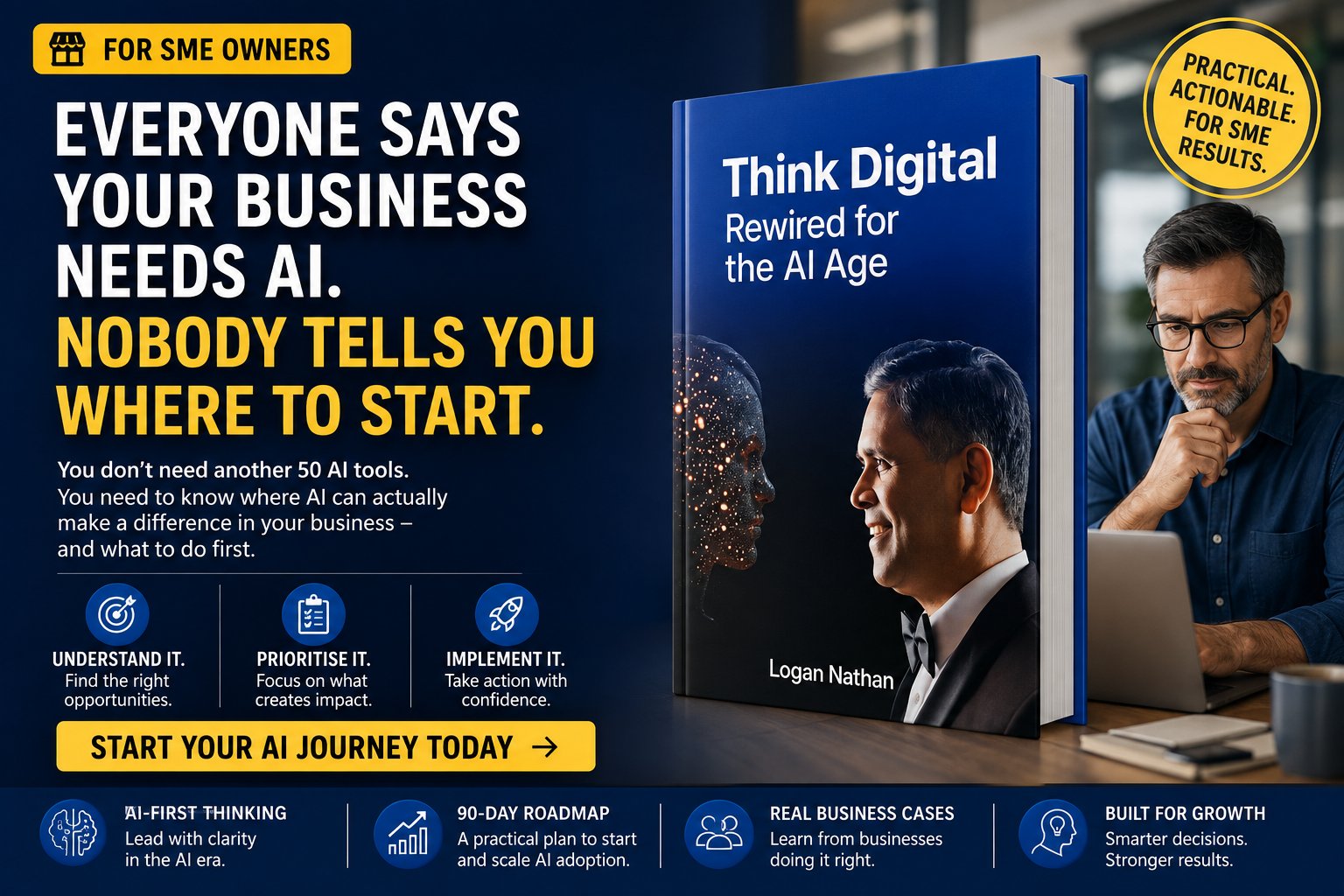
Think Digital: Rewired for the AI Age

In my book, Think Digital – Rewired for the AI Age, I discuss at length how businesses can transform through AI. The key is not just to use AI but to rethink its role within your business. This involves cultivating a digital-first mindset and integrating AI into your business culture.

A digital-first approach demands that businesses not only focus on technology but also on changing their organisational culture to embrace AI-driven decision-making. By aligning AI with your business strategy, you can ensure sustainable growth and relevance in an AI-driven future.

Next Steps: Implementing AI in Your Business

Embarking on the AI journey may seem daunting, but it starts with a single step. Begin by educating yourself and your team about AI’s capabilities and its potential impact on your business. Use strategic resources like AI for SMEs: From Survival to AI-Driven Growth to gain insights and plan your approach.

Once ready, implement AI in one area of your business, measure the outcomes, and iterate based on results. This phased approach allows you to adjust and refine your strategy, ensuring a smoother transition and maximising the benefits of AI integration.

Avoiding Common AI Adoption Pitfalls

One of the most common pitfalls is starting with the technology rather than the problem. SMEs often invest in AI tools before identifying the specific needs they aim to address. This leads to wasted resources and limited impact.

Ensure your AI initiatives are driven by business objectives, not the other way around. Regularly reassess your AI strategy to ensure it continues to align with evolving business needs. Leveraging resources like the Secrets Code Hacks can help businesses navigate the AI landscape effectively.

Expert Opinion: AI as a Game Changer for SMEs

AI is a game-changer for SMEs, providing competitive advantages once reserved for larger corporations. By fostering a strategic approach to AI, businesses can not only improve efficiency but also create new growth opportunities. Engaging with AI is not about the tools themselves, but about how they can transform business operations and strategies.

For professionals and SMEs alike, the question isn’t just about implementing AI but doing so intelligently. As AI continues to evolve, staying informed and adaptable will be crucial to maintaining a competitive edge.

Frequently Asked Questions

AI helps SMEs enhance productivity, automate routine tasks, and provide valuable insights, which are crucial for maintaining competitiveness.

Begin by assessing your AI readiness, identify business areas for improvement, and choose AI solutions that align with your strategic goals.

Common pitfalls include starting with technology rather than strategy, and failing to align AI initiatives with specific business objectives.

Conduct an AI readiness audit focusing on data management, team awareness, and workflow analysis to ensure your business is prepared for AI integration.

A strategic approach involves aligning AI tools with business problems, ensuring solutions address specific needs and maximise operational efficiency.

AI helps SMEs enhance productivity, automate routine tasks, and provide valuable insights, which are crucial for maintaining competitiveness.

Begin by assessing your AI readiness, identify business areas for improvement, and choose AI solutions that align with your strategic goals.

Common pitfalls include starting with technology rather than strategy, and failing to align AI initiatives with specific business objectives.

Conduct an AI readiness audit focusing on data management, team awareness, and workflow analysis to ensure your business is prepared for AI integration.

Sources & Further Reading

#AIIntegration #BusinessStrategy #SMEGrowth

0